
The Ultimate Guide to Desert Nights in Morocco: Stargazing, Silence, and Adventure
There are travel experiences that stay with you long after your journey ends—moments that feel suspended in time, where the world becomes quieter, the sky becomes bigger, and life slows to its most profound simplicity. Desert Nights in Morocco belong to this rare category. As the sun sets behind the towering dunes of the Sahara and the desert begins to cool, a magical transformation takes place. The sky slowly turns from gold to deep blue, then to a blanket of stars so bright they seem close enough to touch. The silence becomes complete, the air becomes crisp, and the dunes glow under the moonlight.
Morocco is one of the few countries in the world where travelers can experience this kind of desert magic with accessibility, safety, and comfort. Whether you’re crossing the dunes on a camel, listening to Berber drums around a campfire, or simply lying in the sand while stargazing, Desert Nights in Morocco offer a journey into both nature and culture. This is not just an overnight stay—it’s a full immersion into nomadic traditions, breathtaking landscapes, and the deep stillness of the Sahara.
Travelers often describe their first night in the desert as life-changing. The overwhelming quiet helps you disconnect from the modern world, while the sky—completely free of light pollution—reveals constellations and shooting stars with extraordinary clarity. Couples find it romantic, adventurers find it thrilling, and families find it unforgettable. No matter your reason for visiting, one thing is certain: Desert Nights in Morocco have a way of leaving a lasting emotional imprint.
This guide is designed to take you deep into the heart of this experience. You’ll learn what makes the Sahara so extraordinary after dark, how to choose between Erg Chebbi and Erg Chigaga, what your evening at the camp will look like, what to pack, when to go, and how to book the perfect trip. Packed with insider tips, cultural insights, and practical advice, this long-form guide will prepare you for an unforgettable adventure.
If you’ve ever dreamed of sleeping under the stars, walking barefoot on soft dunes, or listening to the wind whisper through the Sahara at night, then get ready—because Desert Nights in Morocco are calling.
Why Desert Nights in Morocco Are a Must-Do Experience
Experiencing Desert Nights in Morocco is more than just an item to tick off a travel bucket list—it is a sensory and emotional journey that most travelers describe as one of the most unforgettable moments of their lives. The Sahara Desert, with its endless golden dunes and vast silence, offers a rare escape from the noise, rush, and distractions of everyday life. When night falls, everything slows down, allowing you to truly connect with the environment and with yourself. There is something profoundly grounding about being surrounded by nothing but sand, sky, and stillness.
One of the main reasons travelers are drawn to Desert Nights in Morocco is the feeling of peace that settles over the Sahara after sunset. The desert is a place where the winds soften, the heat fades, and the horizon glows with warm shades of orange and purple. As the last light of day fades, the stars slowly emerge one by one until the sky becomes a breathtaking dome of shimmering constellations. With zero light pollution, the desert reveals a night sky that city dwellers rarely experience—vast, clear, and brilliantly alive. It’s not just beautiful; it’s humbling.
Another powerful aspect of the experience is the cultural immersion. Spending a night in the desert means stepping into the traditions of Morocco’s Berber communities, whose ancestral roots are deeply tied to the Sahara. Around a campfire, you may listen to traditional drumming, hear stories of nomadic life, and share meals inspired by centuries-old recipes. Travelers often describe this cultural exchange as one of the highlights of their Desert Nights in Morocco, because it offers an authentic connection that no city or resort can replicate.
Then there is the landscape itself—raw, dramatic, and otherworldly. The Sahara’s dunes, shaped over thousands of years by winds and shifting sands, look different every hour of the day. At night, they take on a mysterious beauty, glowing softly under the moonlight. Walking across the dunes after dark, with only the sound of your footsteps, is an experience that feels almost surreal. Many travelers say it is the first time they truly understood the power of silence.
Whether you’re a photographer chasing the perfect night shot, a couple seeking a romantic escape, or an adventurer looking for a unique journey, Desert Nights in Morocco deliver something exceptional. The combination of natural beauty, cultural richness, and emotional depth makes this experience stand out from any other travel activity in Morocco. It offers a rare chance to disconnect from technology, reconnect with nature, and feel part of something larger than yourself.
In a world where everything moves fast, the Sahara invites you to pause, breathe, and simply exist. And that is exactly why Desert Nights in Morocco are considered a must-do experience for every traveler.
Erg Chebbi vs Erg Chigaga for Desert Nights in Morocco
When planning Desert Nights in Morocco, the choice between Erg Chebbi and Erg Chigaga is one of the most important decisions you’ll make. These two iconic dune regions offer completely different experiences—both magical, both unforgettable, but each appealing to different types of travelers. Understanding their landscapes, accessibility, atmosphere, and camp styles will help you choose the perfect destination for your Sahara adventure.
Erg Chebbi – The Classic Destination for Desert Nights
Erg Chebbi, located near the town of Merzouga, is Morocco’s most famous dune region and often the first choice for travelers looking for Desert Nights in Morocco. Its dunes are tall, dramatic, and incredibly photogenic—some reaching up to 150 meters in height. This makes Erg Chebbi ideal for travelers who want that iconic Sahara look: golden dunes, sweeping curves, and endless horizons.
One of the biggest advantages of Erg Chebbi is accessibility. The road to Merzouga is paved and straightforward, making it easier to reach than Erg Chigaga. This convenience has led to the development of a wide range of desert camps, from basic nomadic tents to luxurious private suites with electricity, ensuite bathrooms, and gourmet dining. For travelers who want a comfortable and refined desert experience, Erg Chebbi offers plenty of high-quality options.
The presence of luxury camps also makes Erg Chebbi a favorite for couples, honeymooners, and travelers who want a balance between adventure and comfort. Camel rides, sandboarding, 4×4 dune tours, Berber music evenings, and sunrise hikes are all commonly included. While Erg Chebbi is more popular and therefore can feel less remote, its beauty and accessibility make it an exceptional choice for first-time visitors.
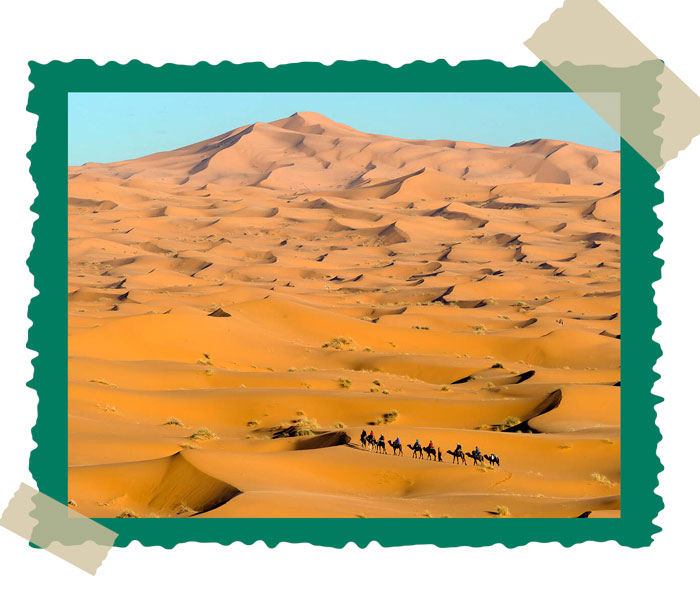
Erg Chigaga – The Wilderness Option for Desert Nights
If you’re dreaming of Desert Nights in Morocco that feel wild, untouched, and completely off the beaten path, then Erg Chigaga is the perfect destination. Located far from major towns and reachable only by 4×4, Erg Chigaga is Morocco’s largest and most remote dune region. Its dunes are slightly lower than those of Erg Chebbi, but what it lacks in height it makes up for in raw authenticity and a powerful sense of solitude.
The journey to Erg Chigaga itself is an adventure—crossing rocky plateaus, dried riverbeds, and small desert villages before reaching the vast rolling dunes. Because it’s not easily accessible, Erg Chigaga receives far fewer tourists, making it ideal for travelers seeking tranquility, privacy, and a true nomadic atmosphere.
Camps here tend to be more eco-friendly and intimate. While luxury options do exist, they are more rustic and minimalist than those in Erg Chebbi, blending naturally with the landscape. Evenings often feel quieter, with fewer camp lights and less human activity, which makes the night sky appear even brighter. For photographers, solitude lovers, and seasoned travelers, Erg Chigaga offers a once-in-a-lifetime desert experience.
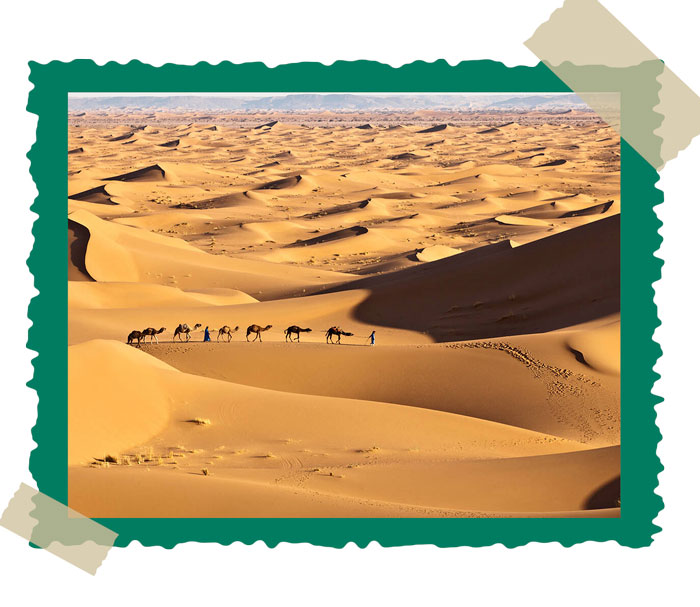
Which One Offers Better Desert Nights in Morocco?
The answer depends on what kind of experience you want. Erg Chebbi is best for travelers who value comfort, convenience, and dramatic scenery. Erg Chigaga is ideal for those who crave adventure, remoteness, and authentic nomadic spirit.
Here’s a quick comparison to help you decide:
| Feature | Erg Chebbi | Erg Chigaga |
|---|---|---|
| Accessibility | Easy (paved road) | Difficult (requires 4×4) |
| Atmosphere | More visitors, lively | Remote, peaceful |
| Landscape | High, dramatic dunes | Wild, expansive dunes |
| Camp Style | Wider range, many luxury options | Rustic, eco-friendly, fewer camps |
| Best For | First-time visitors, couples, families | Adventurers, photographers, solitude seekers |
In reality, both are excellent options for Desert Nights in Morocco, and each offers a different kind of magic. Erg Chebbi gives you the classic Sahara postcard experience; Erg Chigaga gives you the raw and untouched desert wilderness. No matter which one you choose, the nights you spend there will stay with you forever.
Plan Your Desert Adventure Today
Ready to experience the magic of the Sahara for yourself? Book your Desert Nights in Morocco adventure today and discover why travelers from around the world return home with memories that last a lifetime.
Check out trusted desert tour operators, compare camps, and choose the perfect package for your dream desert night. Whether you’re seeking adventure, romance, or serenity, the Sahara awaits.
What to Expect During Desert Nights in Morocco
Experiencing Desert Nights in Morocco is like stepping into another world—one shaped by warm winds, endless dunes, glowing horizons, and starlit skies. From the moment you leave the last village behind and enter the silence of the Sahara, every moment becomes memorable. Whether you choose Erg Chebbi or Erg Chigaga, the rhythm of a desert night follows a beautiful sequence: arrival, sunset, dinner, music, stargazing, sleep, and sunrise. Each phase offers its own magic, its own colors, and its own sensory experience. Below is a detailed look at what your unforgettable night will look like.
The Journey to the Camp
Your adventure begins long before sunset. Depending on your camp, you will either be transported by 4×4 vehicles across rocky terrain, or by camel through the dunes. The journey itself is part of the experience—slow, peaceful, and visually stunning. As you move deeper into the desert, villages disappear, roads vanish, and the landscape transforms into an ocean of sand.
The silence becomes noticeable almost immediately. For many, this is the moment when they truly start to feel the essence of Desert Nights in Morocco: a complete separation from modern life. Your guide may stop along the way for photos or to share stories about nomadic life, the desert’s geography, and the traditions of the region.
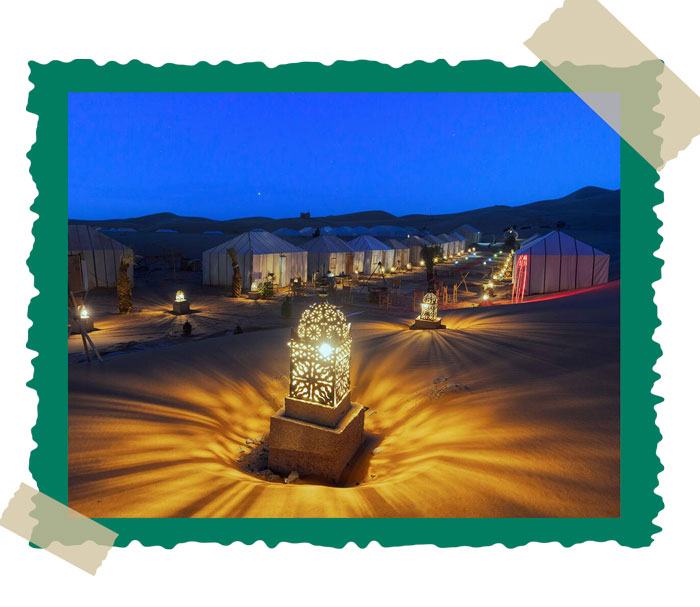
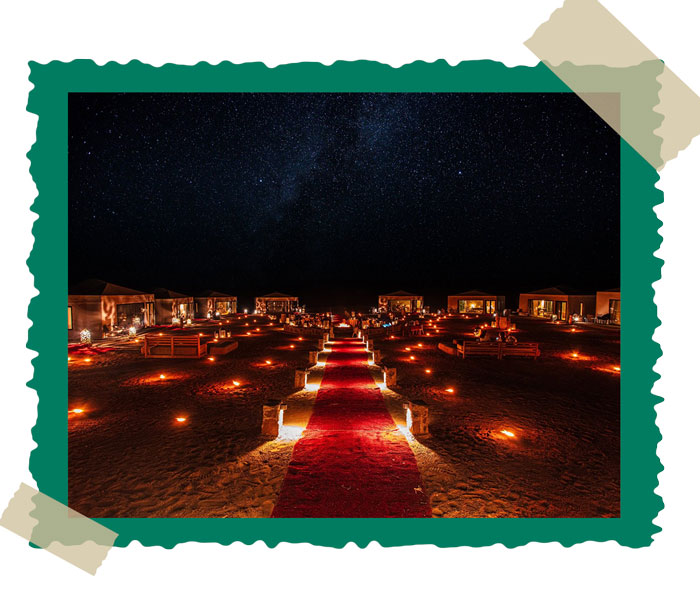
Arriving at the camp, you’re welcomed with Moroccan mint tea—the traditional symbol of hospitality. The warm, sweet flavor helps you settle into the desert mood as you take in your surroundings: tents arranged in a circle, lanterns flickering in the sand, and dunes rising all around you like golden walls.
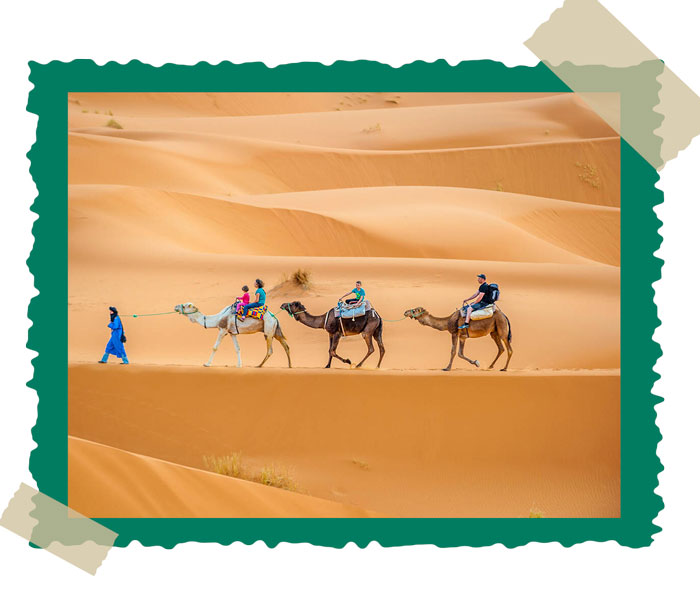
Sunset Over the Dunes
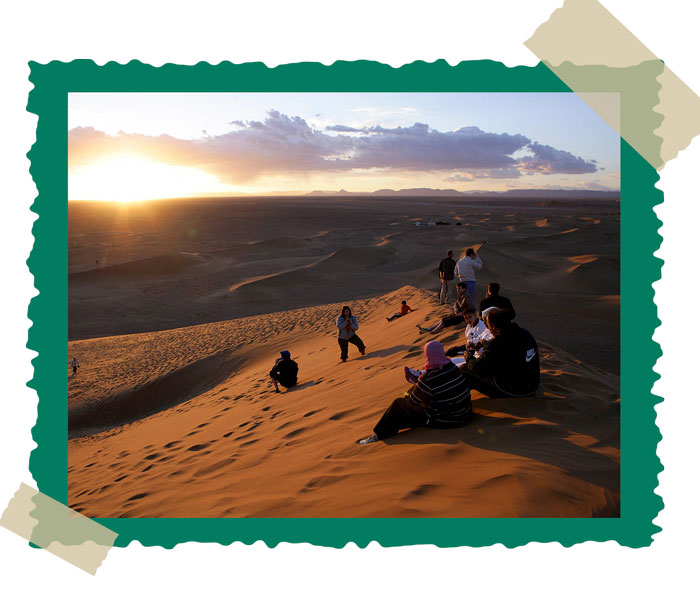
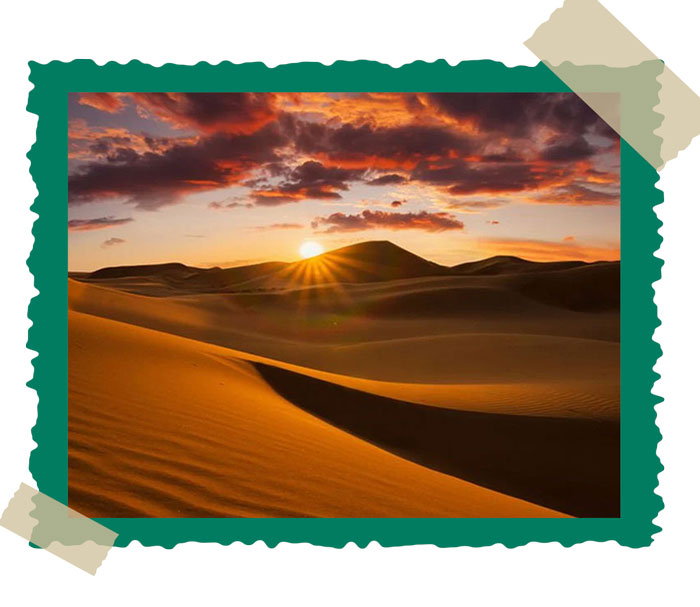
Sunset is one of the most iconic moments of Desert Nights in Morocco. As the sun dips lower, the sky begins to transform into a spectacular canvas of colors—orange, crimson, purple, and soft pink. The dunes change color with every minute, creating shifting shadows and curves that are breathtaking to watch.
Most camps encourage guests to climb the nearest dune to enjoy the sunset from a high viewpoint. Reaching the top is rewarding: the soft sand, the panoramic views, and the cool wind combine to create a moment of pure serenity. Photographers love this time for its golden-hour lighting, but even those without a camera will never forget the view.
When the sun finally slips below the horizon, a calm stillness settles over the Sahara—marking the beginning of the night.
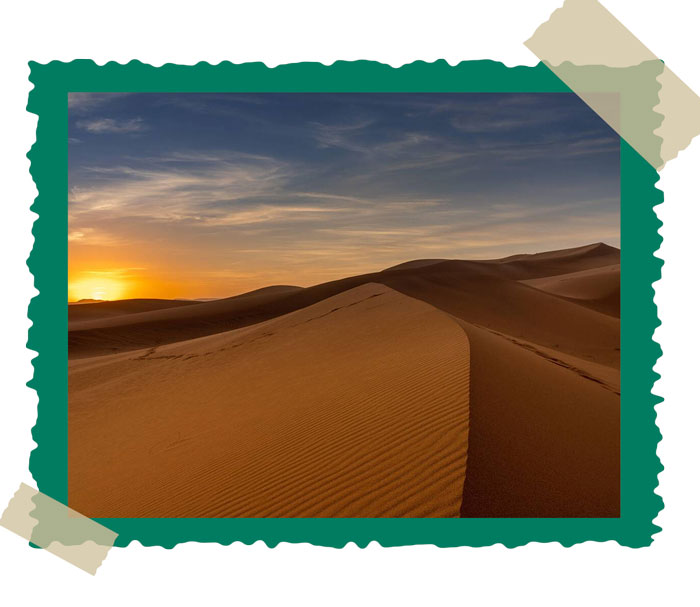
Dinner and Nomadic Music
After sunset, lanterns and candles light up the camp as dinner is prepared. Most camps serve traditional Moroccan dishes: warm soups, fresh salads, tajines cooked slowly over coals, couscous, and sweet pastries. Meals are shared at low tables around a communal dining area, allowing guests to talk, relax, and enjoy the gentle atmosphere.
The cultural experience deepens as local Berber musicians gather around the fire to play traditional drums and songs. The rhythm of the music echoes across the dunes, creating an unforgettable ambiance. Many guests join in, clap along, dance, or simply relax by the fire. This part of Desert Nights in Morocco often becomes a highlight, as the music connects travelers to the nomadic heritage of the region.
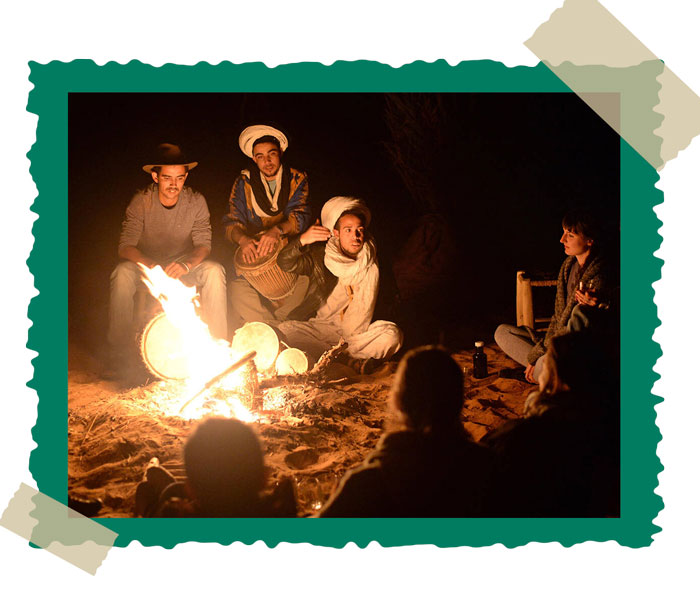
Stargazing in the Sahara
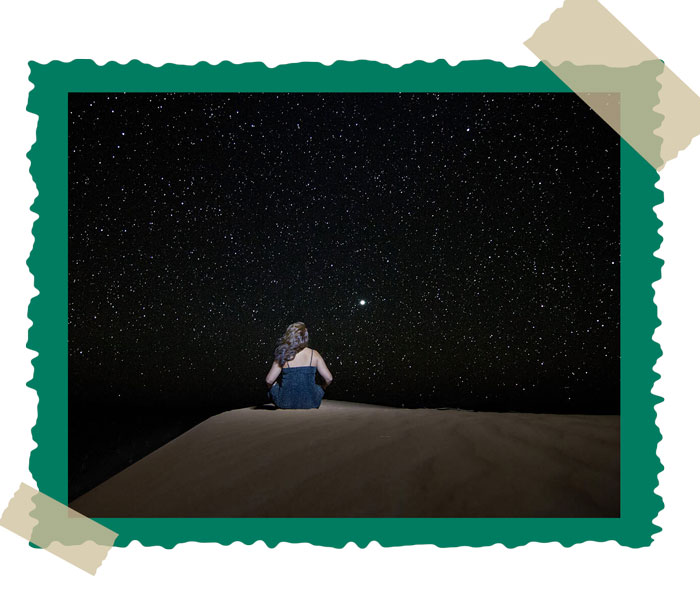
Stargazing is one of the most extraordinary parts of Desert Nights in Morocco. Far from any light pollution, the Sahara offers some of the clearest night skies in the world. As the fire fades and the air cools, millions of stars emerge, revealing constellations, planets, and even the Milky Way on clear nights.
The silence is almost otherworldly. Many travelers choose to lie directly on the sand, wrapped in a blanket, simply watching the sky. Shooting stars are common, and the longer you look, the more details you see. This moment creates a profound sense of connection—with nature, with time, and with yourself. It’s peaceful, intimate, and unforgettable.
For photographers, this is an ideal time for long-exposure shots. The contrast between the dark dunes and the bright sky creates breathtaking images.
Sleeping in Desert Tents
After a night of music and stargazing, it’s time to rest. Desert camps vary in comfort—from traditional nomadic tents with shared bathrooms to luxurious private suites with electricity and ensuite facilities. Regardless of style, sleeping in the Sahara has a special charm.
The desert becomes incredibly quiet. The air cools, and the sky remains bright with stars. Many travelers describe sleeping in the desert as deeply calming: no cars, no city sounds, just the gentle breeze and the sound of shifting sand.
Even in luxury camps, the atmosphere remains simple and authentic. Thick blankets keep you warm, and the dim lantern light creates a peaceful environment. Waking up in the middle of the night and seeing the stars through the tent opening is an experience you’ll never forget.
Sunrise After a Desert Night
Sunrise marks the final chapter of Desert Nights in Morocco, and it’s just as magical as sunset. The dunes begin to glow as the first light of day breaks across the horizon. The air is cool and fresh, and the world feels quiet and new.
Most travelers wake before dawn to climb a dune and watch the sunrise. The colors shift from blue to gold, and shadows stretch dramatically across the desert floor. It’s the perfect moment for reflection, photography, or simply appreciating the beauty of the Sahara.
After sunrise, breakfast is served—fresh bread, olives, jams, eggs, yogurt, and hot tea or coffee—before guests prepare to leave the camp. The journey back through the dunes feels different, as the desert looks new in morning light.
Types of Camps for Desert Nights in Morocco
Choosing where to stay is one of the most important parts of planning Desert Nights in Morocco. The type of camp you select will shape the atmosphere, comfort level, and style of your experience. Morocco’s desert offers a wide range of options—from humble nomadic tents to luxurious boutique-style camps. Each type has its own character and charm, and understanding the differences will help you select the perfect camp for your travel style.
Below is a detailed breakdown of the main types of Sahara desert camps you’ll find in Erg Chebbi and Erg Chigaga.
Standard Desert Camps
Standard camps are the closest you’ll get to the traditional way Berber nomads live in the Sahara. These camps usually feature simple, spacious tents made from camel hair, canvas, or thick woven fabric designed to withstand sun and wind. The atmosphere is rustic but warm, offering an authentic introduction to desert life.
Inside each tent, you’ll typically find comfortable mattresses, blankets, candles or lanterns for lighting, and basic furnishings. Bathrooms are usually shared, and electricity may be limited or unavailable. Meals consist of hearty Moroccan dishes prepared in traditional ways—cooked over open flames, served family-style, and rich in flavor.
Standard camps are affordable, culturally rich, and deeply immersive. They’re perfect for travelers who want Desert Nights in Morocco that feel real, simple, and connected to local life. Adventurers, backpackers, and culture-focused visitors often find these camps the most rewarding.
Luxury Desert Camps
Luxury desert camps take comfort to another level while still preserving the magic of being surrounded by dunes. These camps combine the charm of nomadic hospitality with the amenities of a boutique hotel. If you want a comfortable experience without giving up the beauty of the Sahara night, this option is ideal.
Luxury tents are typically spacious, beautifully decorated with Berber textiles, and equipped with electricity, private bathrooms, hot showers, and sometimes even air conditioning or heating. Comfortable beds with high-quality linens ensure a good night’s sleep. Many luxury camps offer private dining, elegant lounge areas, and staff on hand to assist with everything.
Cuisine in luxury camps goes beyond standard tajines. You might enjoy multi-course meals, gourmet dishes, freshly baked bread, and desserts under the stars. The atmosphere remains peaceful and intimate, but with more privacy and fewer guests.
Luxury camps are perfect for couples, honeymooners, families, or anyone who wants Desert Nights in Morocco with a touch of elegance, comfort, and exclusivity.
VIP or Private Camps
For travelers seeking the ultimate desert escape, VIP or private camps offer complete seclusion and total customization. These camps are usually set far from other camps to ensure absolute privacy and silence. They are often booked by couples celebrating special occasions, travelers seeking solitude, or guests wanting to experience the Sahara exactly as they envision it.
A VIP camp may consist of just one or two tents, but they are equipped with everything you need: spacious bedrooms, private bathrooms, luxurious decor, personalized dining service, and dedicated staff. These camps allow you to dine privately under the stars, enjoy personalized music sessions, choose your activities, and feel like the desert belongs entirely to you.
This level of exclusivity makes VIP camps the most expensive option—but also the most extraordinary. For travelers who want Desert Nights in Morocco that feel magical, intimate, and tailor-made, private camps offer an experience you will remember for a lifetime.
Choosing the Right Type of Camp
Each type of desert camp offers its own way of experiencing the Sahara:
-
Standard camps: authentic, budget-friendly, immersive.
-
Luxury camps: comfortable, romantic, elevated.
-
VIP camps: private, exclusive, unforgettable.
Your choice depends on your travel style, budget, and what you want your night in the desert to feel like. Whether you choose simplicity, comfort, or total exclusivity, all types of camps deliver the same core highlight: the timeless beauty of Desert Nights in Morocco.
What to Pack for Desert Nights in Morocco
Packing for Desert Nights in Morocco requires careful planning. The desert environment is unique: temperatures can swing dramatically between day and night, sand can get everywhere, and access to modern conveniences is limited. Bringing the right items ensures that your night in the Sahara is comfortable, safe, and unforgettable. Below is a comprehensive guide to everything you should pack.
Clothing for Day and Night
The Sahara is hot during the day and can become surprisingly cold at night. Layering is essential.
-
Daytime clothing: Lightweight, breathable fabrics such as cotton or linen are ideal. Long sleeves and pants help protect against sunburn and windblown sand.
-
Nighttime clothing: Warm layers like sweaters, fleece jackets, or thermal wear are necessary for the chilly desert nights. Even summer nights can drop to 10–15°C (50–59°F).
-
Footwear: Comfortable walking shoes or boots for trekking in sand and sturdy sandals for relaxing at the camp.
-
Accessories: A wide-brimmed hat, scarf, or shawl to shield your face from sun and sand; sunglasses to protect your eyes.
Essentials for Comfort and Safety
Certain items will make your desert night more enjoyable and ensure your safety.
-
Flashlight or headlamp: Essential for moving around the camp after dark.
-
Power bank: Electricity may be limited, so keep your devices charged.
-
Water bottle: Hydration is crucial, especially after trekking or camel rides.
-
Sunscreen and lip balm: Protect your skin against sunburn and dry air.
-
First aid kit: Basic supplies for minor cuts, scrapes, or insect bites.
Photography and Stargazing Gear
Desert nights are perfect for capturing incredible photos.
-
Camera or smartphone with a good camera: Long-exposure settings help capture stars.
-
Tripod: Essential for night photography.
-
Binoculars or telescope: Optional but enhances stargazing experiences.
-
Notebook or journal: Record your observations, sketches, or reflections under the night sky.
Toiletries and Personal Items
Although camps provide basic facilities, it’s smart to bring your own supplies.
-
Biodegradable soap and shampoo (eco-friendly options preferred)
-
Toothbrush and toothpaste
-
Towels (quick-dry are ideal)
-
Moisturizer to combat dry desert air
Optional Items for Extra Comfort
-
Lightweight blanket for lounging outside
-
Snacks for the trek or midnight cravings
-
Travel pillow for sleeping in tents
-
Playing cards, travel games, or books for quiet camp evenings
Tips for Packing Light
Remember, many desert camps are reached by camel or 4×4, so packing light is highly recommended. A durable backpack with organized compartments will make your journey easier. Essentials should be accessible, while luxury or non-essential items can remain in your main luggage.
By preparing thoughtfully, you can fully enjoy Desert Nights in Morocco without worry. The right clothing, gear, and supplies make the night comfortable, safe, and unforgettable—allowing you to focus entirely on the magic of the Sahara.
Best Time of Year for Desert Nights in Morocco
Choosing when to experience Desert Nights in Morocco is essential for comfort, safety, and enjoyment. The Sahara Desert has a unique climate: hot, dry days, cold nights, and occasional seasonal winds. Selecting the right time ensures that your night in the desert is magical rather than challenging. Here’s a detailed breakdown of the best seasons to plan your adventure.
Spring (March – May)
Spring is one of the most popular times to experience Desert Nights in Morocco. During these months, daytime temperatures are warm but not excessively hot, usually ranging between 20–30°C (68–86°F). Nighttime temperatures are mild, allowing for comfortable sleeping in tents without heavy blankets.
Spring is also ideal for travelers who want to explore the desert dunes without extreme heat. The weather is generally stable, with clear skies perfect for stargazing. Desert flowers may bloom in scattered areas, adding subtle bursts of color to the sandscape. For first-time visitors or those prioritizing comfort, spring offers one of the most enjoyable experiences of the Sahara.
Autumn (September – November)
Autumn is another excellent season for Desert Nights in Morocco. The heat of summer begins to fade, making both day and night pleasant for outdoor activities. Temperatures are similar to spring, ranging from 22–32°C (72–90°F) during the day and cooling to 12–18°C (54–64°F) at night.
Autumn also tends to have very clear skies, ideal for stargazing. Winds are generally calmer than in spring, reducing sandstorms and making camel rides and dune trekking easier. This season is perfect for travelers who want a combination of comfortable weather, dramatic desert landscapes, and unforgettable night skies.
Summer (June – August)
Summer in the Sahara can be extremely hot during the day, with temperatures often exceeding 40°C (104°F). Nights, however, can still be enjoyable because the heat dissipates after sunset. For those prepared for high temperatures, summer offers very dry and predictable weather.
If you plan to experience Desert Nights in Morocco during summer, it’s best to schedule evening activities carefully. Avoid trekking or camel rides during peak heat hours. Luxury camps with air-conditioned tents or shaded lounges are highly recommended. Despite the heat, summer nights can be mesmerizing—especially if you enjoy sleeping under clear skies with uninterrupted stargazing.
Winter (December – February)
Winter offers a different, equally magical experience for Desert Nights in Morocco. Daytime temperatures are cool, usually between 15–22°C (59–72°F), while nights can be very cold, sometimes dropping close to 0°C (32°F) in the dunes. For those who enjoy crisp air and clear skies, winter is ideal for stargazing.
Winter nights are particularly serene because the desert is quieter and less crowded. Campfires are essential for warmth, and tents with heating or extra blankets are recommended. This season suits travelers who are prepared for cold nights but want a more peaceful and private desert experience.
Tips for Choosing the Best Time
-
For comfort and mild weather: Spring and Autumn
-
For clear skies and stargazing: Winter and Spring
-
For fewer crowds and solitude: Winter and Autumn
-
For a hot, sun-soaked adventure: Summer (with precautions)
No matter the season, Desert Nights in Morocco offer a magical escape into the Sahara. Your choice of timing will affect your comfort and activities, but the beauty, silence, and star-filled skies remain unforgettable year-round.
Safety Tips for Desert Nights in Morocco
While Desert Nights in Morocco are enchanting, the Sahara is a unique environment that requires preparation and awareness. Ensuring your safety and comfort allows you to fully enjoy the experience without unnecessary stress. From weather precautions to health tips, here’s everything you need to know.
Stay Hydrated
The desert is extremely dry, and even mild physical activity can deplete your body quickly. Drinking plenty of water before, during, and after your desert adventure is essential. Most camps provide water, but it’s smart to carry your own refillable bottle during camel rides or dune trekking. Avoid alcohol and excessive caffeine, which can increase dehydration.
Protect Yourself From the Sun and Sand
During the day, the Sahara sun is intense. Wear lightweight, long-sleeved clothing, a wide-brimmed hat, and sunglasses to shield yourself. Apply high SPF sunscreen to exposed skin and lip balm to prevent dryness. Sandstorms are rare but possible—scarf or bandana can protect your mouth, nose, and eyes if strong winds kick up dust.
Prepare for Temperature Swings
Desert nights can be surprisingly cold. Bring layers, including sweaters, jackets, and thermal clothing if visiting in winter or early spring. Luxury tents often provide blankets, but additional layers can make the night more comfortable. Likewise, daytime temperatures can be very hot, so plan outdoor activities for early morning or late afternoon when the sun is less intense.
Choose Reputable Camps and Guides
Selecting a trusted camp or tour operator is crucial. Look for camps with positive reviews, professional guides, and clear safety measures. Experienced guides know the desert’s terrain, can navigate dunes safely, and handle emergencies. Avoid unlicensed operators or overly cheap options that may compromise safety.
Stay Aware of Your Surroundings
While the desert is generally safe, it’s important to stay alert. Watch your step on dunes, avoid climbing unstable sand ridges, and never wander alone at night. Keep track of group members and follow your guide’s instructions during all activities, including camel rides, hikes, and transfers.
Health and First Aid
Carry a basic first aid kit with essentials like bandages, antiseptic wipes, pain relievers, and any personal medications. If you have pre-existing conditions, inform your guide beforehand. Desert environments can trigger dehydration, sunburn, or fatigue, so it’s important to pace yourself and take regular breaks.
By following these guidelines, you can enjoy Desert Nights in Morocco safely and fully. The desert’s beauty, silence, and starlit skies are best experienced with confidence and preparation.
Cost of Desert Nights in Morocco
Understanding the cost of Desert Nights in Morocco is essential for planning your trip and ensuring a worry-free experience. Prices vary widely depending on the type of camp, season, location, and included activities. Below is a detailed breakdown to help you budget your Sahara adventure effectively.
Standard Camps
Standard desert camps are the most budget-friendly option for experiencing Desert Nights in Morocco. Prices typically range from $30 to $80 per person per night, depending on the camp’s location and facilities.
These camps generally include:
-
Accommodation in shared tents
-
Dinner and breakfast
-
Traditional tea and snacks
-
Optional camel trek or guided dune walk (sometimes extra)
Standard camps are perfect for travelers seeking authenticity without high costs. Despite their simplicity, the quality of the desert experience—sunsets, stargazing, and cultural immersion—remains exceptional.
Luxury Camps
Luxury camps offer a higher level of comfort, privacy, and amenities. Prices generally range from $100 to $250 per person per night. Some high-end options can exceed $300 per night, especially during peak season or in VIP-style setups.
Luxury camp packages usually include:
-
Private or semi-private tents with beds and linens
-
Ensuite bathrooms or modern facilities
-
Gourmet Moroccan meals and beverages
-
Camel rides, guided desert excursions, and cultural activities
-
Extras like fire pits, lanterns, or stargazing setups
These camps appeal to couples, honeymooners, and travelers who want an elegant desert experience without sacrificing the magic of Desert Nights in Morocco.
VIP or Private Camps
For the ultimate desert experience, VIP or private camps provide exclusivity and customization. Prices for these experiences typically start at $350–$500 per person per night and can go higher depending on the location, services, and duration of your stay.
VIP packages often include:
-
Private tent or suite with luxury furnishings
-
Personal staff for dining and activities
-
Tailored experiences such as private sunset walks, stargazing, or photography tours
-
Total privacy and seclusion in remote areas
While more expensive, these options offer a once-in-a-lifetime experience, ensuring your Desert Nights in Morocco are not only magical but entirely your own.
Additional Costs to Consider
When budgeting for Desert Nights in Morocco, remember potential extras:
-
Transport to and from the desert (4×4 or bus)
-
Camel rides or adventure activities
-
Tips for guides and camp staff
-
Optional photography workshops or night excursions
Planning for these additional costs ensures there are no surprises and allows you to fully enjoy the adventure.
Money-Saving Tips
-
Book early, especially during peak season (spring and autumn)
-
Compare packages from multiple operators
-
Choose standard camps if you want the authentic experience at a lower cost
-
Combine desert nights with multi-day tours for better value
Regardless of your budget, the magic and beauty of Desert Nights in Morocco remain accessible. With careful planning, you can enjoy a safe, comfortable, and unforgettable desert adventure without overspending.
Conclusion: Why Desert Nights in Morocco Stay With You Forever
Experiencing Desert Nights in Morocco is more than just an overnight stay—it is a journey into a world of silence, stars, and unforgettable landscapes. From the moment you leave the last village behind and enter the golden dunes, the Sahara begins to work its magic. Every step, every sunset, every whisper of wind reminds you of the vastness, beauty, and timelessness of the desert.
The true essence of Desert Nights in Morocco lies in the combination of natural wonder, cultural immersion, and emotional impact. Whether you’re lying under a star-studded sky, listening to the rhythmic beats of Berber drums, or watching the sunrise paint the dunes in golden light, the experience is both humbling and awe-inspiring. It is a chance to disconnect from modern life, reconnect with nature, and create memories that last a lifetime.
No matter the type of camp, location, or season, the Sahara delivers moments of magic that travelers carry with them forever. From the accessible luxury of Erg Chebbi to the raw solitude of Erg Chigaga, every desert night has its own charm and story. Travelers return from the desert with a sense of calm, reflection, and appreciation for the simplicity and grandeur of this unique environment.
If you’ve ever dreamed of sleeping beneath an endless sky, walking across vast dunes, or experiencing the quiet majesty of the Sahara, Desert Nights in Morocco are calling. Now is the time to plan your journey and immerse yourself in one of the world’s most unforgettable travel experiences.
+212 600 000 000
WowMoroccoTours@gmail.com
The post The Ultimate Guide to Desert Nights in Morocco: Stargazing, Silence, and Adventure appeared first on Wow Morocco Tours.
]]>
Sunset Camel Tour in Merzouga: Your Complete Guide to Morocco’s Desert Magic
There’s a moment during a sunset camel tour in Merzouga when time seems to stop. The desert wind quiets, the camels’ footsteps soften into the sand, and the Sahara transforms into an ocean of gold and amber. This isn’t just another tourist activity; it’s an experience that touches something deeper, connecting you to centuries of desert tradition and the raw beauty of nature.
If you’re planning a trip to Morocco, a sunset camel tour in Merzouga deserves a top spot on your itinerary. Here’s everything you need to know to make the most of this unforgettable adventure.
Why a Sunset Camel Tour in Merzouga is Unmissable
Merzouga sits at the gateway to the Erg Chebbi dunes, where some of Morocco’s most spectacular sand formations rise up to 150 meters high. Unlike typical desert excursions, a sunset camel tour in Merzouga offers something truly special: the chance to witness one of nature’s most stunning performances from the back of a gentle camel, just as nomadic travelers have done for generations.
What makes this experience extraordinary:
The light here is legendary. As the afternoon sun begins its descent, the dunes shift through a spectrum of colors, from warm gold to deep copper, then fiery orange touched with purple shadows. Photographers call it “magic hour,” but no camera truly captures the feeling of being there, surrounded by towering dunes that seem to glow from within.
Beyond the visual spectacle, there’s an intangible quality to the Sahara at sunset. The desert’s vastness puts daily worries into perspective, while the rhythmic sway of camel riding creates a meditative state. It’s peaceful yet exhilarating, solitary yet deeply connecting.
What to Expect: Your Sunset Camel Tour Experience
The Beginning: Meeting Your Camel and Guide
Most sunset camel tours in Merzouga begin around 4:00-5:00 PM, depending on the season. You’ll meet at your hotel, a desert camp, or a designated meeting point in Merzouga village. Your Berber guide, often someone whose family has lived in the desert for generations, will introduce you to your camel.
Don’t worry if you’ve never ridden a camel before. These “ships of the desert” are surprisingly gentle, and the mounting process is straightforward (though the initial lurch as they stand up can be amusing). Your guide will ensure you’re comfortable and secure before setting off.
Pro tip: Camels kneel down for mounting but stand up back legs first. Hold on tight and lean back during the standing process!
The Journey: Crossing the Erg Chebbi Dunes
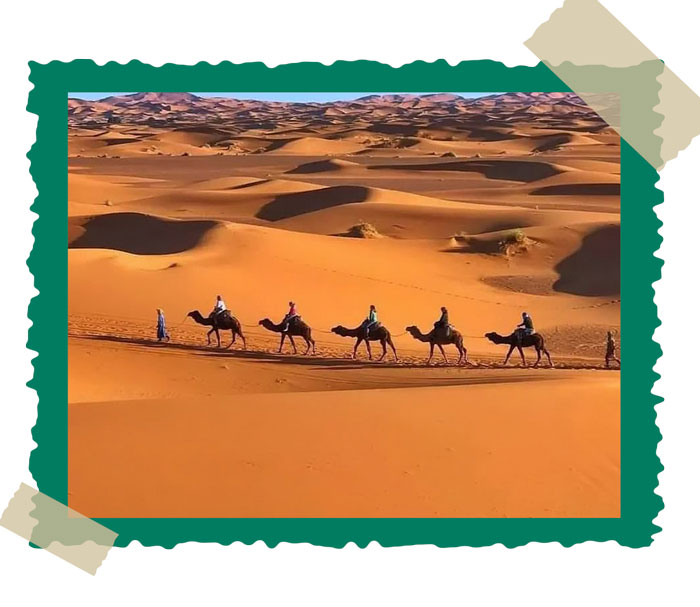
Once you’re settled, your camel caravan will head into the heart of the Erg Chebbi dunes. The ride typically lasts 1.5-2 hours, taking you deep enough into the desert to escape any trace of modern life.
The experience is surprisingly peaceful. The soft padding of camel hooves on sand creates a natural rhythm, while the height of your seat (nearly 2 meters up) provides panoramic views across the undulating dune fields. Your guide will navigate the traditional paths, sometimes leading your caravan single-file along dune ridges, other times crossing wide valleys of pristine sand.
As you ride, notice how the desert reveals its secrets: wind-sculpted patterns in the sand, hardy desert plants, occasional tracks of desert foxes or beetles. Your guide can point out these details and share stories about desert life, nomadic traditions, and the history of the region.
The Main Event: Sahara Sunset
About 30-45 minutes before sunset, your guide will stop at a prime viewing location, usually atop or beside a high dune with unobstructed views to the west. This is your time to be present simply.
Watch as the sun sinks toward the horizon, painting the sky in layers of color. The dunes around you become study in light and shadow, with the windward sides glowing gold while the leeward faces deepen into purple and blue. It’s a photographer’s paradise, but remember to put the camera down occasionally and just experience the moment.
Many tours include traditional mint tea served at sunset, sipped while sitting on carpets spread across the sand, it’s the perfect complement to the scenery. Some guides bring drums and may perform traditional Berber music as darkness begins to fall.
Desert Camp Experience (Optional)
Many sunset camel tours in Merzouga include a visit to a traditional Berber desert camp. Some tourists opt for a day trip (returning to Merzouga after sunset), while others choose an overnight stay to experience the full magic of desert nights.
At the camp, you might enjoy:
- Welcome tea and traditional Moroccan pastries
- Authentic Berber dinner (tagine, couscous, fresh bread)
- Campfire gatherings with music and storytelling
- Star gazing in some of the darkest skies you’ll ever see
- Traditional nomadic tents for overnight guests
- Sunrise camel rides for those staying overnight
The camps range from basic (authentic nomadic-style tents with simple amenities) to luxury (private en-suite tents with comfortable beds), so choose based on your comfort level and budget.
Best Time for a Sunset Camel Tour in Merzouga
Optimal seasons: March through May and September through November offer the most comfortable temperatures for a sunset camel tour in Merzouga. Daytime temperatures are pleasant (20-30°C), and evenings are cool but not cold.
Summer (June-August): Possible but extremely hot, with daytime temperatures exceeding 45°C. If you visit in summer, a sunset tour is actually ideal since you avoid the scorching midday heat.
Winter (December-February): Daytime tours are comfortable, but desert nights can drop to near freezing. Dress in layers and prepare for cold evenings if staying overnight.
Sunset timing varies by season: In summer, sunset occurs around 7:30-8:00 PM; in winter, around 5:30-6:00 PM. Tours adjust their departure times accordingly.
Practical Tips for Your Sunset Camel Tour
What to Wear
Clothing: Loose, breathable layers work best. Long, lightweight pants protect your legs from sun and saddle. A long-sleeved shirt prevents sunburn. Bring a warm jacket for after sunset, as desert temperatures drop quickly.
Footwear: Closed-toe shoes or sandals with back straps. You’ll be walking on sand, and shoes may fill up, consider this part of the experience!
Head covering: Essential. A scarf or shemagh (traditional desert scarf) protects against sun, wind, and blowing sand. Your guide can show you how to wrap it Berber-style.
What to Bring
- Camera or smartphone with extra battery/power bank
- Sunglasses and sunscreen (SPF 30+)
- Water bottle (at least 1 liter per person)
- Small backpack for personal items
- Cash for tips (50-100 MAD for a guide is customary)
- Motion sickness medication if you’re prone to it (camel swaying can affect some people)
Booking Your Tour
Sunset camel tours in Merzouga can be booked through:
- Your hotel or riad (most accommodations can arrange tours)
- Local tour operators in Merzouga village
- Online platforms (book in advance during peak season)
Prices typically range from 300-600 MAD ($30-60 USD) per person for a standard 2-3 hour tour, with overnight packages costing 600-1500 MAD ($60-150 USD) depending on camp quality and included meals.
Book at least 24-48 hours in advance during peak season (March-May, September-November) to ensure availability.
Beyond the Sunset: Other Merzouga Experiences
While your sunset camel tour in Merzouga will be a highlight, the region offers other compelling experiences:
Khamlia Village: Just 7km from Merzouga, this village is home to Gnawa people, descendants of sub-Saharan Africans. Attend a traditional Gnawa music performance, and the hypnotic rhythms and spiritual singing are unforgettable.
Dayet Srji Salt Lake: This seasonal lake (fullest in spring) attracts flamingos and other migratory birds. It’s particularly beautiful at sunset when not on a camel tour.
Fossil hunting: The desert around Merzouga is rich in fossils from when this area was an ancient ocean. Local guides can take you fossil hunting.
Quad biking and sandboarding: For adrenaline seekers, these activities offer a faster-paced way to explore the dunes.
4×4 desert tours: Explore more remote areas of the Sahara, including abandoned mines, desert oases, and nomadic settlements.
Your sunset camel tour in Merzouga awaits
The desert has a way of staying with you long after you leave in your photos, in your memories, and in the part of your heart that will always belong to the Sahara.
Ready to book your sunset camel tour in Merzouga? Research us by one click!
Making the Most of Your Experience
Photography Tips
- Golden hour is key: The 30 minutes before and after sunset offer the best light
- Shoot from different angles: Climb nearby dunes for elevated perspectives
- Include silhouettes: Camels and people make dramatic silhouettes against the colorful sky
- Protect your gear: Keep cameras in bags when not shooting to prevent sand damage
- Embrace the moment: Take photos, but don’t experience the entire sunset through a lens
Cultural Etiquette
Your Berber guide is sharing their ancestral homeland with you. Show respect by:
- Asking permission before photographing local people
- Being patient with the pace, desert time moves differently
- Showing interest in their culture and traditions
- Supporting local businesses by purchasing crafts or booking local tours
- Following environmental principles (leave no trace)
Safety Considerations
Sunset camel tours in Merzouga are generally very safe, but keep in mind:
- Camel riding is gentle but can cause soreness; it uses different muscles than you’re used to
- Dehydration happens quickly in desert air. Drink water regularly
- Sun exposure is intense, reapply sunscreen and cover up
- Follow guide instructions especially during mounting/dismounting
- Travel insurance is recommended for any adventure activities
Frequently Asked Questions
How long does a sunset camel tour in Merzouga last?
Most tours run 2-3 hours total: approximately 1-1.5 hours riding to the sunset location, 30-45 minutes for sunset viewing, and 1-1.5 hours returning. Overnight tours extend this to include dinner, entertainment, and sunrise the next morning.
Is camel riding difficult or uncomfortable?
Camel riding is easier than it looks! The motion is gentle and rhythmic, though you may experience some soreness afterward (similar to horseback riding). Most people find it surprisingly comfortable once they adjust to the swaying motion.
Can children and elderly people participate?
Yes! Sunset camel tours in Merzouga are suitable for most ages and fitness levels. Children typically love it (minimum age usually 4-5 years), and the pace accommodates elderly participants. Inform your tour operator of any mobility concerns when booking.
What if I’m afraid of heights or animals?
Camels are tall (about 2 meters to the saddle), but they’re gentle and calm. Guides are experienced with nervous riders and can provide extra assistance. If you’re very uncomfortable, some tours offer the option to ride in a 4×4 vehicle instead while others go by camel.
Do I need previous riding experience? No experience necessary! Guides provide basic instruction, camels follow established paths, and the pace is leisurely. This is designed for first-time riders.
What happens if weather is bad? Tours operate in most conditions, but extreme sandstorms may cause cancellations. Overcast skies can actually create beautiful, dramatic sunsets. Your operator will advise you if conditions are unsafe.
Are sunset camel tours in Merzouga ethical?
Reputable operators treat their camels well; these animals are valuable assets and part of the family for Berber guides. Look for well-fed, healthy-looking camels that aren’t overloaded. Avoid operators offering very cheap tours, as they may not prioritize animal welfare.
Can I book a private tour?
Yes, most operators offer private sunset camel tours in Merzouga for couples, families, or groups. Private tours cost more but offer flexibility in timing, pace, and route.
Why This Experience Matters
In our hyperconnected world, few experiences offer true disconnection. A sunset camel tour in Merzouga is one of them. Out there in the Sahara, with sand stretching endlessly in every direction and the only sounds being wind and camel footsteps, you remember what silence feels like. You remember how big the world is and how small your everyday worries are by comparison.
But it’s more than just escape. This experience connects you to something ancient to the nomadic peoples who have crossed these sands for millennia, to the caravan traders who once followed these routes, to the simple human joy of witnessing natural beauty.
Whether you’re an adventure seeker, a culture enthusiast, a photographer, or simply someone who wants to experience something truly different, a sunset camel tour in Merzouga delivers. It’s one of those rare travel experiences that exceeds expectations rather than falling short of them.
The Sahara Desert has been called many things: forbidding, harsh, and inhospitable. But from the back of a camel at sunset, with golden light spilling across endless dunes and the peaceful silence broken only by the wind, you’ll discover another truth: it’s absolutely beautiful.
+212 600 000 000
WowMoroccoTours@gmail.com
The post Sunset Camel Tour in Merzouga: Your Complete Guide to Morocco’s Desert Magic appeared first on Wow Morocco Tours.
]]>
Camel Trekking in Morocco: Why It’s a Must-Try Experience
Morocco, a land of mesmerizing landscapes and rich cultural heritage, offers a unique and unforgettable adventure—camel trekking. Whether you are journeying through the golden dunes of the Sahara Desert, traversing ancient caravan routes, or witnessing breathtaking sunrises and sunsets over vast sandscapes, camel trekking is an experience that captures the essence of Morocco’s nomadic traditions. If you’re planning a trip to this North African gem, here’s why camel trekking should be on your bucket list.
The Tradition of Camel Trekking in Morocco
Camels, often referred to as the “ships of the desert,” have played a vital role in Morocco’s history. For centuries, Berber and Tuareg nomads relied on these resilient animals for transportation and trade along the trans-Saharan routes. Today, camel trekking remains an integral part of Moroccan culture, offering travelers a glimpse into the nomadic way of life while providing an unparalleled adventure across stunning desert landscapes.
Best Places for Camel Trekking in Morocco
1. Merzouga and the Erg Chebbi Dunes
One of the most famous and breathtaking places for camel trekking, Erg Chebbi near Merzouga boasts towering sand dunes that change color with the shifting light. A camel trek here often includes an overnight stay in a traditional desert camp, where visitors can enjoy Berber music, a delicious Moroccan dinner, and stargazing under a pristine desert sky.
2. Zagora and the Erg Chigaga Dunes
For a more remote and rugged experience, Zagora and Erg Chigaga offer an off-the-beaten-path adventure. Unlike the higher dunes of Erg Chebbi, this region provides a more authentic, less touristy camel trekking experience, with a chance to explore the vast, untouched beauty of the desert.
3. Agafay Desert
If you’re short on time and based in Marrakech, the Agafay Desert is a great alternative. Though not a sandy desert like the Sahara, Agafay offers stunning rocky landscapes and camel treks just a short drive from the city, making it a perfect option for a quick getaway.
Plan Your Moroccan Adventure with simple click!
Discover the magic of Morocco with our expertly crafted tours. From the golden dunes of the Sahara to the bustling souks of Marrakech, immerse yourself in breathtaking landscapes, rich history, and authentic cultural experiences.
What to Expect on a Camel Trekking Experience
1. A Journey Through Time
Riding a camel allows you to slow down and take in the surreal beauty of Morocco’s deserts just as traders and nomads did centuries ago. The rhythmic sway of the camel and the vast silence of the desert create a meditative and peaceful experience.
2. Overnight in a Desert Camp
Most camel treks include a stay in a desert camp, where you can enjoy local cuisine, warm hospitality, and traditional Berber music around a campfire. Sleeping under a canopy of stars is one of the highlights of the trek.
3. Magical Sunrises and Sunsets
Witnessing the sun setting over the dunes and rising in the morning is an experience unlike any other. The colors of the desert change dramatically, creating picture-perfect moments.
Essential Tips for Camel Trekking in Morocco
-
Wear comfortable clothing: Loose, breathable fabrics are ideal for the desert climate.
-
Protect yourself from the sun: Bring a hat, sunglasses, and sunscreen to shield yourself from the intense desert sun.
-
Stay hydrated: The dry desert air can be dehydrating, so carry enough water.
-
Bring a scarf or turban: This helps protect against sand and sun exposure.
-
Pack light: If you’re staying overnight, most camps provide basic necessities, so only bring essentials like a camera, flashlight, and toiletries.
Plan Your Moroccan Adventure with simple click!
Discover the magic of Morocco with our expertly crafted tours. From the golden dunes of the Sahara to the bustling souks of Marrakech, immerse yourself in breathtaking landscapes, rich history, and authentic cultural experiences.
Why Camel Trekking is a Must-Try Experience
1. A Unique and Authentic Adventure
Camel trekking is an opportunity to connect with Morocco’s ancient traditions, immersing yourself in the lifestyle of the desert nomads.
2. Spectacular Landscapes
From the rolling dunes of Erg Chebbi to the rocky terrain of Agafay, the diverse landscapes of Morocco offer some of the most breathtaking views in the world.
3. A Break from Modern Life
The tranquility and vastness of the desert allow you to disconnect from technology and enjoy a peaceful, reflective journey.
4. Cultural and Culinary Delights
Camel trekking is more than just a ride—it’s an experience that includes enjoying traditional Moroccan dishes, learning about Berber customs, and listening to folk stories around a campfire.
Conclusion
Camel trekking in Morocco is a must-try experience that combines adventure, culture, and natural beauty. Whether you choose the dramatic dunes of Merzouga, the remote charm of Erg Chigaga, or the rocky landscapes of Agafay, you’re guaranteed an unforgettable journey. So, saddle up and embark on a timeless adventure through Morocco’s majestic deserts!
Are you ready for your camel trekking adventure? Let us know in the comments where you’d love to experience this magical journey!
+212 600 000 000
WowMoroccoTours@gmail.com
The post Camel Trekking in Morocco: Why It’s a Must-Try Experience appeared first on Wow Morocco Tours.
]]>